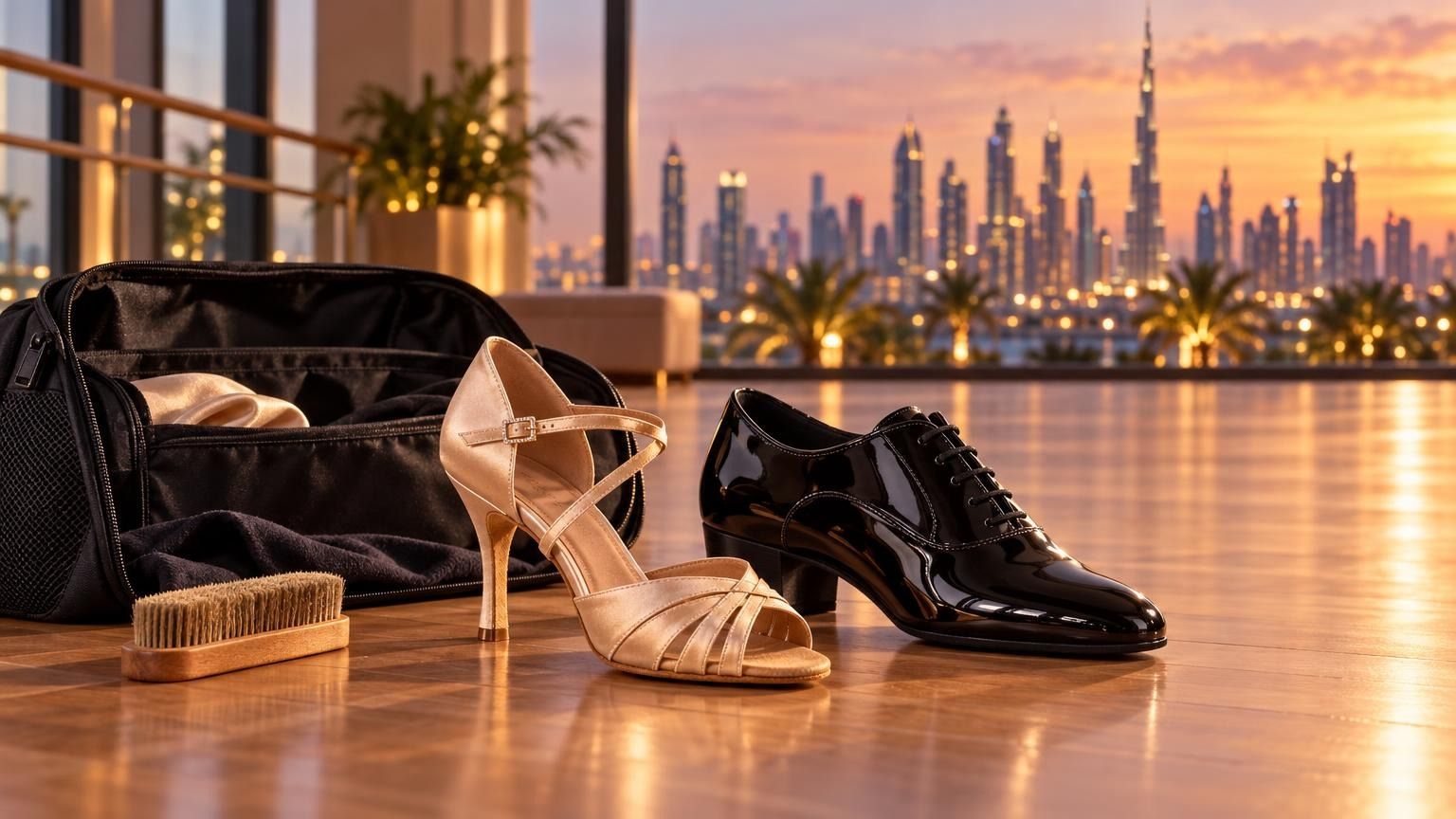
Best Shoes for Ballroom Dancing: a Coach's Guide
The best shoes for Ballroom dancing have a suede sole, a light and flexible build with a metal shank for arch support, and a snug fit. Ladies usually start with a closed-toe court shoe with an ankle strap and a medium flared heel; men wear black lace-up Standard shoes with a low heel. For Latin, ladies choose open-toe sandals and men a slightly higher Cuban heel. Beginners can start in smooth-soled shoes and buy dance shoes after a few lessons.
The best shoes for Ballroom dancing are the ones you forget about while you dance. Good dance shoes let you turn without fighting the floor, point your feet and keep your balance, and they protect your knees and ankles. The wrong pair, whether it grips too much, slides too much or lets your foot move inside, makes even simple steps hard. As coaches, we see it often in lessons. Here is our practical guide to dance shoes: what makes them different from street shoes, how Ballroom shoes differ from Latin dance shoes, how to choose the fit and heel, and when a beginner really needs them.
What makes a dance shoe different from a street shoe
- Suede sole. All dance shoes, for ladies and men, have non-slip suede soles that give the right blend of grip and glide on a dance floor.
- Metal shank. A thin metal support in the arch keeps the shoe stable while the rest stays flexible.
- Light and flexible. You can point and articulate your foot, which is impossible in stiff street shoes.
- Secure fit. Ankle straps, laces and a close shape keep the foot from moving inside the shoe during turns.
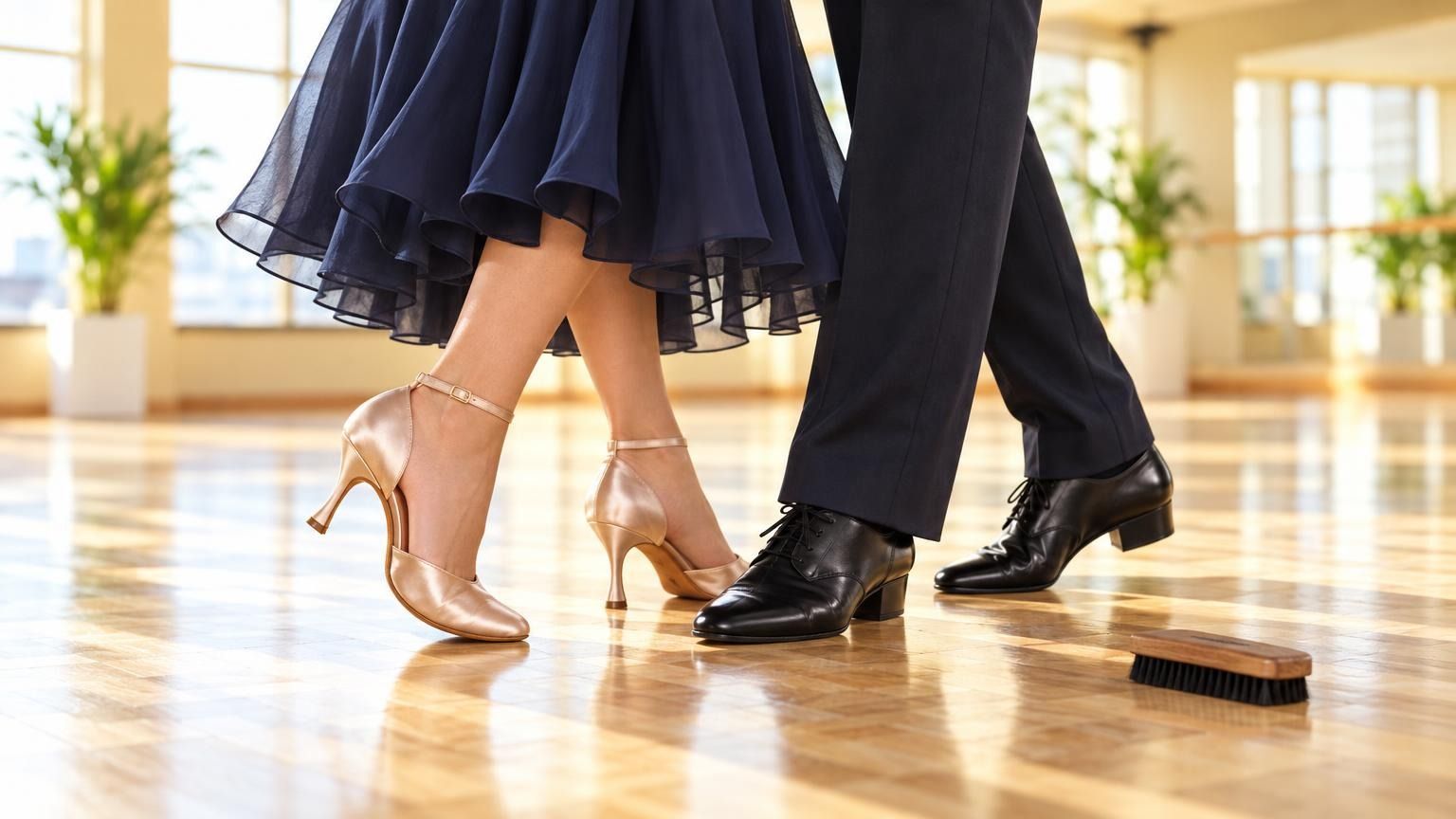
Best shoes for Ballroom dancing: Standard shoes
Ballroom, or Standard, dances (English Waltz, Tango, Viennese Waltz, Slow Foxtrot and Quickstep) travel around the floor with long steps and heel leads. That is why Standard shoes are closed and built for smooth travelling.
Ladies' Ballroom shoes
The classic choice is a closed-toe court shoe, also called a standard or modern dance shoe. Heels in ladies' dance shoes generally range from 1 to 3 inches (1 inch is about 2.5 cm). Slim heels make turns easier, while flared heels give more stability. For a lady new to dancing, a good first pair that works for many dances is a closed-toe pump with a 2 to 2.5 inch flared heel and an ankle strap.
Men's Ballroom shoes
Men's Standard shoes are typically black lace-up Oxfords with a flat, low heel. They should feel light, close-fitting and flexible through the arch.
Latin dance shoes for women and men
Latin dances (Cha-Cha-Cha, Samba, Rumba, Pasodoble and Jive) are danced more on the spot, with a lot of work on the ball of the foot. Latin dance shoes are designed for that.
Latin shoes for women
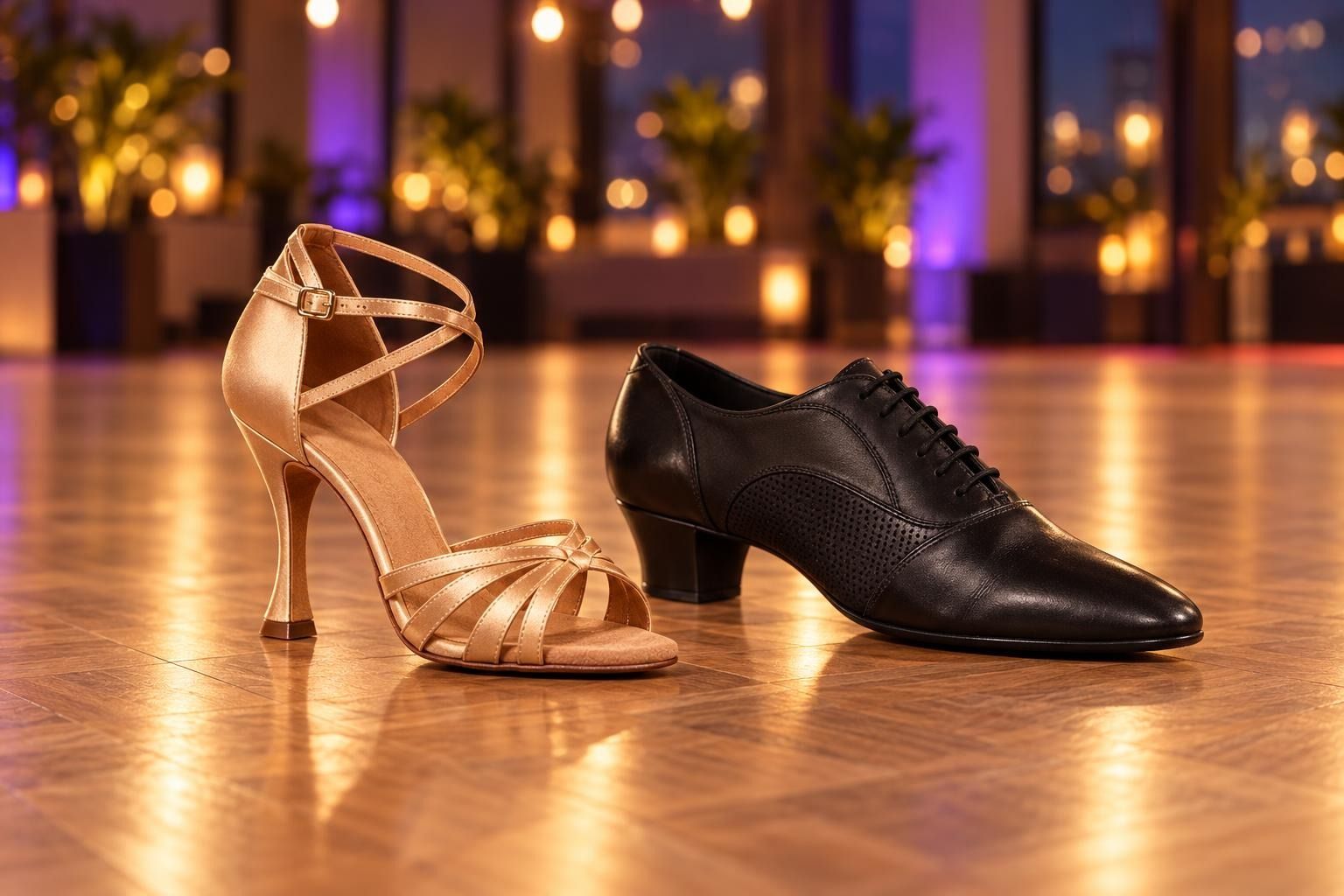
Ladies usually wear open-toe sandals or strappy shoes for Latin, with a 2 or 3 inch heel. Choose a lower heel if you are not used to dancing in heels. Most are made of leather, light and flexible, with suede soles. In a Latin sandal your toes should be as close as possible to the front of the shoe; some dancers like their toes to reach the very edge so they can point and feel the floor.
Latin shoes for men
Men's Latin shoes are light, flexible lace-ups with a 1.5 inch "Cuban" heel and suede soles, in leather, nubuck or patent leather. Many men buy them only for competitions; for Social dancing you will rarely see men in Cuban heels.
Shoes for Salsa, Bachata and Argentine Tango
For Social dances, many ladies choose Social-style sandals: often a wider fit, a slightly more relaxed shape and comfort for a long evening on the floor. Teaching and practice shoes are also popular for lessons. Men often dance Social styles in a lower heel, such as a Standard-type or practice shoe. Whatever you choose, keep the suede sole: it is what lets you turn.
| Style | Ladies | Men | Why |
|---|---|---|---|
| Ballroom (Standard) | Closed-toe court shoe, ankle strap | Black lace-up Oxford, low heel | Long travelling steps and heel leads |
| Latin | Open-toe sandal, 2 to 3 inch heel | Lace-up with a 1.5 inch Cuban heel | Ball-of-foot action, pointed feet |
| Social | Social-style sandal or practice shoe | Standard-type or practice shoe | Comfort for long evenings, easy turns |
| Practice | Teaching and practice shoes | Practice shoes | Long lessons and rehearsals |
Coach's tip: wear your dance shoes only on the dance floor and carry them in a separate bag. Street dust, sand and water ruin a suede sole quickly. When the sole starts to feel slippery, brush it lightly with a suede brush and the grip comes back.
How to choose the right fit: a checklist
- Buy your first pair in person. Try several styles before you decide, rather than ordering blindly.
- Snug, not tight. The shoe should hug your foot like a glove. Too tight causes blisters, too loose makes you trip.
- Check the heel. Choose a height you can control in turns. Comfort first, height later.
- Walk, rise and turn in the shoes, not just stand in them.
- Look at the straps. An ankle strap keeps the shoe on during fast figures.
- Choose the colour. Black is the most popular. Many ladies choose flesh-coloured shoes for competitions because they extend the line of the leg.
When should a beginner buy dance shoes?
Not before the first lesson. For your first classes, comfortable clothes and shoes with a smooth sole are enough. Avoid trainers and other rubber soles: they grip the floor so much that turning becomes hard and the knees take the strain. After a few lessons, when you know which style you enjoy most, it is the right time for your first pair of dance shoes. Ladies who are not sure yet can start with one versatile closed court shoe; men can start with a Standard shoe.
Caring for dance shoes in Dubai
- Never leave your shoes in a hot car. Summer heat can soften glue and dry out leather.
- Let them air after every lesson before you close the bag.
- Brush the suede soles regularly, and keep them away from water.
- Use heel protectors if you practise on different floors.
We help you choose dance shoes in Dubai
We have worked in the dance world for years and are happy to advise our students on what to buy: style, model and size for your dance and your level. We also have reliable partners for high-quality professional dance shoes, clothes and accessories, and we can help you place an order. See our Dance Shoes page for examples of ladies' and men's styles.
Next step: book your first lesson in comfortable shoes, and ask your coach about the right dance shoes once you know your style.
Questions and Answers
What are the best shoes for Ballroom dancing?
Shoes with a suede sole, a metal shank for arch support and a snug fit. Ladies usually choose a closed-toe court shoe with an ankle strap; men wear black lace-up Standard shoes with a low heel.
What is the difference between Ballroom and Latin shoes?
Ballroom shoes are closed and built for long travelling steps. Latin shoes are more flexible for work on the ball of the foot: open-toe sandals for ladies and a 1.5 inch Cuban heel for men.
What heel height should a beginner choose?
Ladies new to dancing often start with a 2 to 2.5 inch flared heel, which is stable and works for many dances. If you are not used to heels, choose a lower one.
Can I dance in sneakers or street shoes?
Rubber soles grip the floor too much, which makes turns hard and strains the knees. For your first lessons, shoes with a smooth sole are fine.
When should a beginner buy dance shoes?
After a few lessons, when you know which style you enjoy most. You don't need dance shoes for your first lesson.
Can you help me choose dance shoes in Dubai?
Yes. We advise our students on the style, model and size to buy and can help them place an order with our partners.
Book your first class
The right shoes matter, but the first lesson matters more. Start with a 45-minute First Individual Trial Dance Class at Dance For You, Dubai's first professional Ballroom dance studio, teaching since 2010. No partner, no experience and no special shoes needed.
Explore Dance Shoes, Ballroom Dance Classes, Latin and Social Dance Classes and Private Dance Lessons.