Ballroom, Latin or Social: Which Dance Is Right for You?
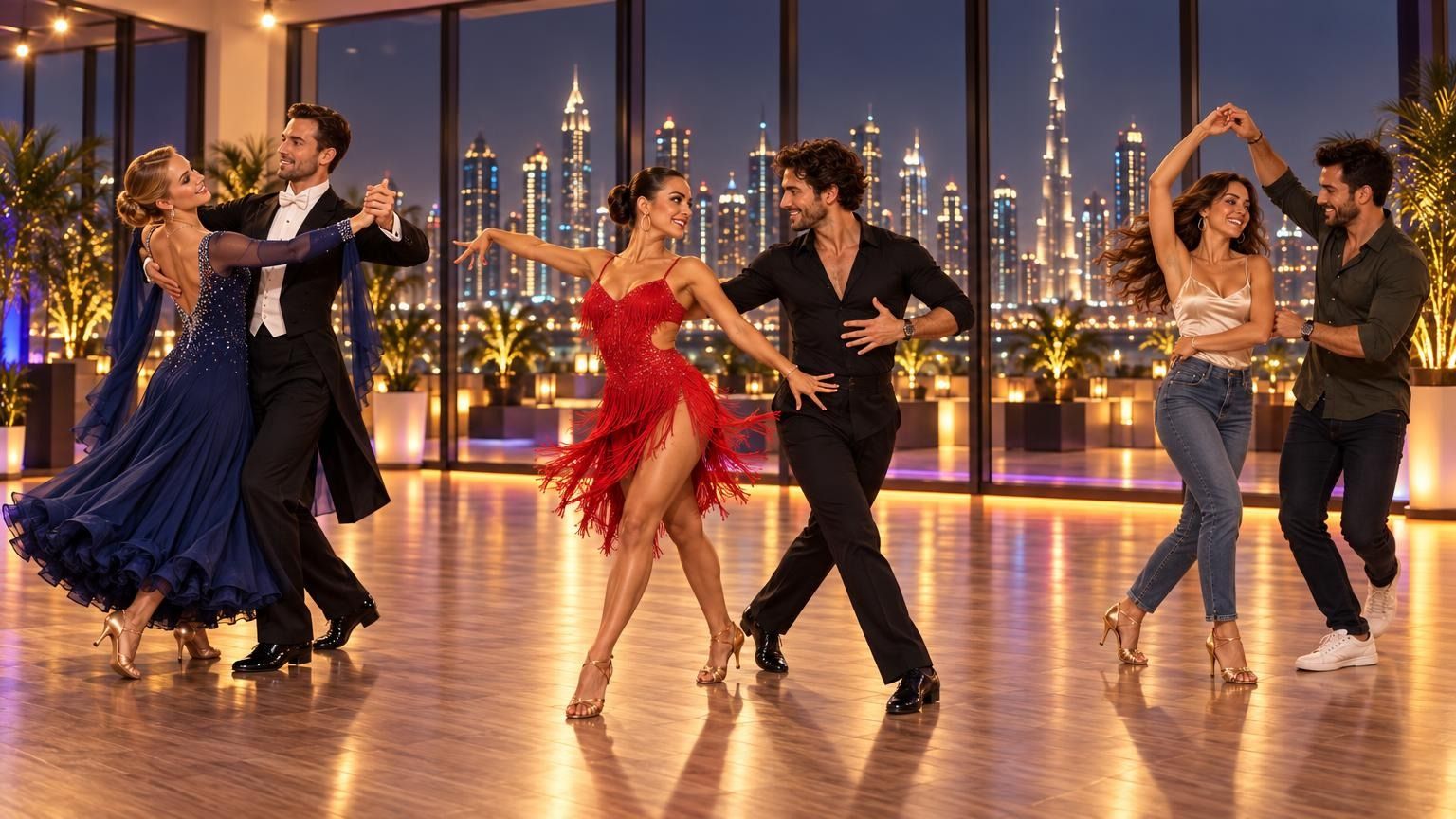
Ballroom (Standard) dances, namely English Waltz, Tango, Viennese Waltz, Slow Foxtrot and Quickstep, are elegant and danced in closed hold, travelling around the floor. Latin-American dances, namely Cha-Cha-Cha, Samba, Rumba, Pasodoble and Jive, are rhythmic, expressive and danced more on the spot. Social dances such as Salsa, Bachata, Merengue, Argentine Tango and Disco/Hustle are relaxed, led and improvised, and made to enjoy with any partner.
What is Ballroom dancing, and how is it different from Latin dance or Social dance? It is one of the first things beginners ask, usually followed by a second question: "Which one is right for me?" The words are confusing because they are used in two ways. In everyday speech, "Ballroom dancing" means all partner dances together: Standard, Latin and Social. In the dance world, Ballroom usually means only the five Standard dances. This guide explains all three families of dances, the difference between the two Tangos, and how to choose the style that suits your music, your goals and your character.
What is Ballroom dancing?
In the strict sense, Ballroom, or Standard, is a family of five dances that couples dance in closed hold, moving around the floor together. The frame stays connected from the first step to the last, and the beauty lies in smooth, travelling movement, posture and perfect timing between partners.
- English Waltz: slow, lyrical and soaring, the most romantic of the five.
- Tango: sharp, dramatic and staccato, with quick head movements and strong character.
- Viennese Waltz: fast and rotating, a whirl of continuous turns.
- Slow Foxtrot: smooth, continuous and elegant, born in America in the early twentieth century.
- Quickstep: fast, light and joyful, full of quick steps and runs.
Ballroom suits people who love elegance, classical and jazz music, and the feeling of gliding across a large floor. More on our Ballroom Dance Classes page.
Latin dance: rhythm, energy and expression
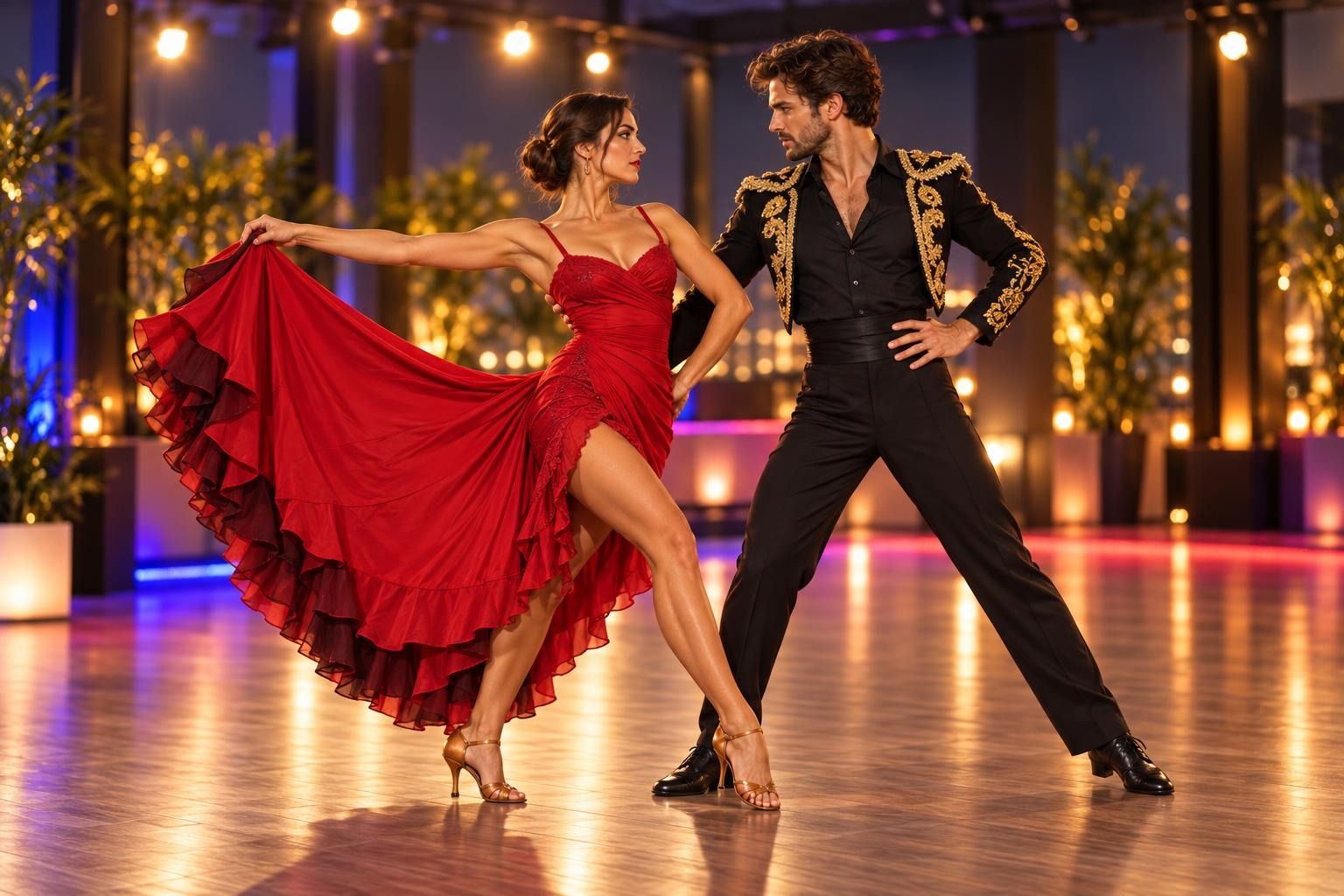
The Latin-American program is the second half of international Ballroom dancing. These dances are more rhythmic and are danced more on the spot, often in open positions where partners separate and come back together. They are danced at shows, galas and Pro-Am competitions.
- Cha-Cha-Cha: playful and cheeky, born in Cuba, famous for its quick triple steps.
- Samba: festive and bouncy, with the energy of a Brazilian carnival.
- Rumba: slow, romantic and expressive, with Cuban roots.
- Pasodoble: proud and theatrical, inspired by the Spanish bullfight.
- Jive: fast, bright and full of kicks, traditionally the last dance at championships.
Latin suits people who want energy, a strong workout and a chance to express character. See Latin and Social Dance Classes.
Social dance: made for parties and Social Nights
Social dances are not built around a fixed competition syllabus. They are led and improvised, so you can dance them with anyone at a party once you know the basics. They are the dances of Dubai's Social Nights, which run several nights a week.
- Salsa: born from Cuban music, energetic, playful and full of turns.
- Bachata: romantic, from the Dominican Republic, with easy steps you can enjoy quickly.
- Merengue: one of the simplest partner dances to start, cheerful and light.
- Argentine Tango: an intimate, improvised dance born in Buenos Aires, built on trust between partners.
- Disco/Hustle: modern, upbeat and perfect for parties.
Ballroom, Latin and Social side by side
| Ballroom (Standard) | Latin-American | Social | |
|---|---|---|---|
| Dances | English Waltz, Tango, Viennese Waltz, Slow Foxtrot, Quickstep | Cha-Cha-Cha, Samba, Rumba, Pasodoble, Jive | Salsa, Bachata, Merengue, Argentine Tango, Disco/Hustle |
| Hold | Closed hold throughout | Open and closed positions | Relaxed, varies by dance |
| Movement | Travels around the floor | Mostly on the spot | On the spot, small space |
| Feeling | Elegance and flow | Rhythm and expression | Fun and connection |
| Where you dance it | Galas, weddings, Pro-Am | Shows, galas, Pro-Am | Parties and Social Nights |
Tango classes for beginners: Ballroom Tango or Argentine Tango?
Many people who search for Tango classes for beginners don't realise there are two very different Tangos. Both come from the same Argentine roots, but they grew in different directions.
- Ballroom Tango is part of the Standard program. It has defined figures, sharp staccato action, dramatic head turns and travels around the floor. Choose it if you like structure, drama and perhaps competitions one day.
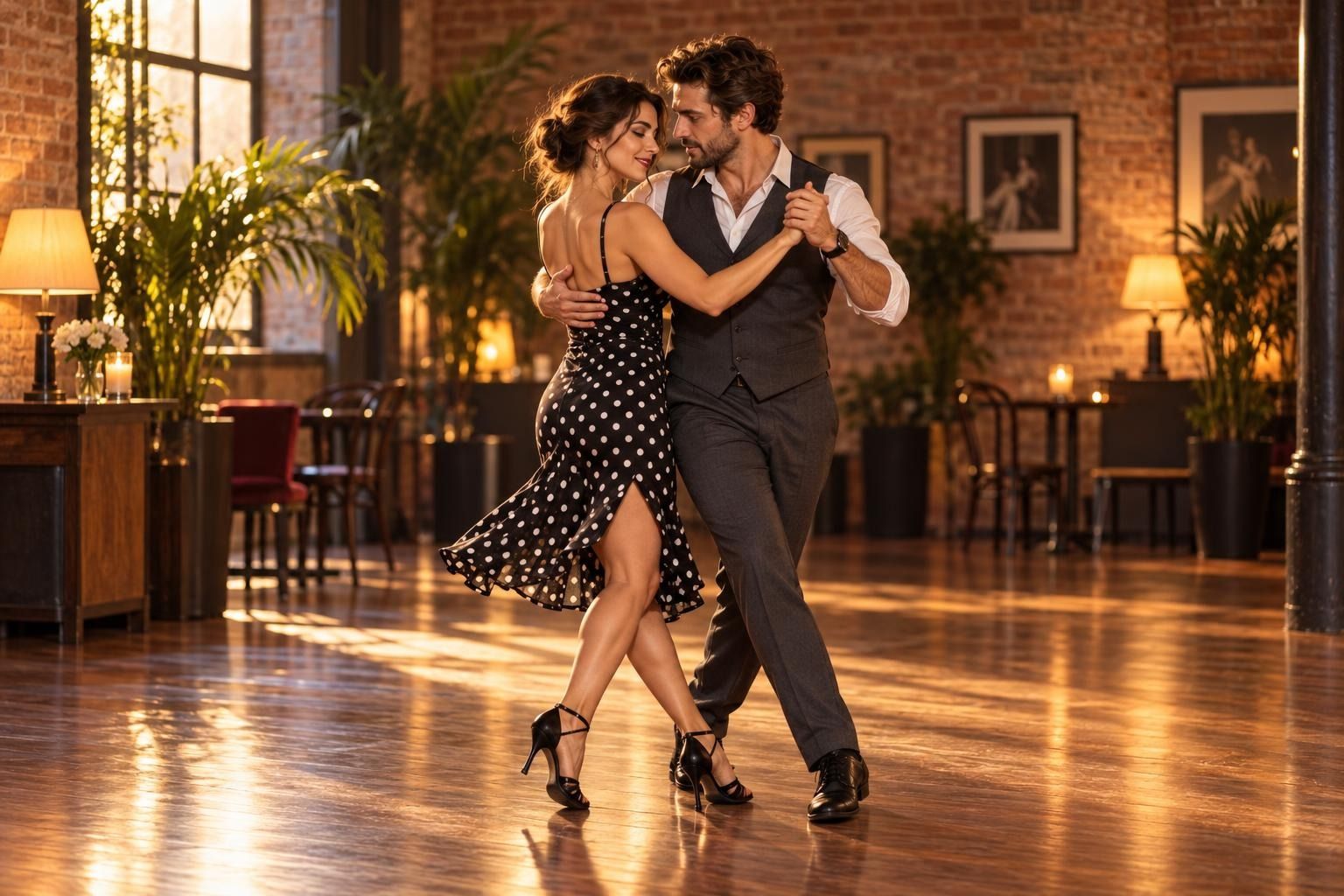
- Argentine Tango is a Social dance. It is improvised, danced in a close embrace and built on walking, listening and trust. Choose it if you want a deep, calm connection with your partner and the music.
Not sure? Try both in your first lessons. The difference is obvious within minutes.
How to choose: five questions to ask yourself
- Where do you want to dance? At galas and weddings, Ballroom shines. At parties and Social Nights, choose Social. On stage or at competitions, Ballroom and Latin.
- Which music do you love? Classical and jazz lead to Ballroom; Latin rhythms lead to Latin and Salsa; romantic ballads suit Rumba, Waltz and Bachata.
- Structure or improvisation? If you like clear figures, start with Ballroom or Latin. If you like freedom, start with Social.
- How much energy? Jive, Samba and Quickstep are a real workout. Waltz, Foxtrot and Rumba are calmer but demanding in control.
- Is there a date ahead? For a wedding, your choreographer will choose the style that suits your song.
Coach's tip: don't choose only with your head. Put on a Waltz, a Cha-Cha-Cha and a Salsa at home and notice which one makes your feet move before you think about it. That dance is usually the right first choice.
Can you learn more than one style?
Yes, and many dancers do. Skills travel between styles: the posture you learn in Ballroom makes your Latin cleaner, and the rhythm of Latin helps your Salsa. Even the steps are related; Cha-Cha-Cha and Bachata, for example, share more than you would expect. Our programs follow clear dance levels, from Newcomer to Gold, so you can grow in one style or several. To see the styles in action before your first lesson, watch the showcases on our YouTube channel.
Next step: tell us on WhatsApp which family of dances attracts you, and we will plan your first lesson around it.
Questions and Answers
What is Ballroom dancing?
In everyday speech, Ballroom dancing means all partner dances. In the strict sense, it is the Standard program: English Waltz, Tango, Viennese Waltz, Slow Foxtrot and Quickstep, danced in closed hold around the floor.
What is the difference between Ballroom and Latin?
Ballroom is danced in closed hold and travels around the floor. Latin-American dances, namely Cha-Cha-Cha, Samba, Rumba, Pasodoble and Jive, are more rhythmic and are danced more on the spot.
Which dance is easiest for beginners?
For parties and Social Nights, Salsa or Bachata. If you love the look of Ballroom and Latin, Waltz and Cha-Cha-Cha are the usual first dances.
Is Argentine Tango the same as Ballroom Tango?
No. Ballroom Tango is part of the Standard program, with defined figures and sharp action. Argentine Tango is an improvised Social dance in a close embrace.
What are Social dances?
Salsa, Bachata, Merengue, Argentine Tango, Disco/Hustle and more. They are relaxed, led and improvised, and made to enjoy with any partner at Social Nights.
Can I learn more than one style?
Yes. Many students combine Ballroom and Latin, or add a Social dance. Your coach plans the order with you.
Book your first class
The best way to find your dance is to try it. Start with a 45-minute First Individual Trial Dance Class at Dance For You, Dubai's first professional Ballroom dance studio, teaching Ballroom, Latin-American and Social dances since 2010. No partner and no experience needed.
Explore Ballroom Dance Classes, Latin and Social Dance Classes, Argentine Tango and Salsa.